加勒比海盗
‘We got to go back to China’: Influencer IShowSpeed stunned by Chinese robot’s Cristiano Ronaldo "SIU" celebration_我的网站

A |
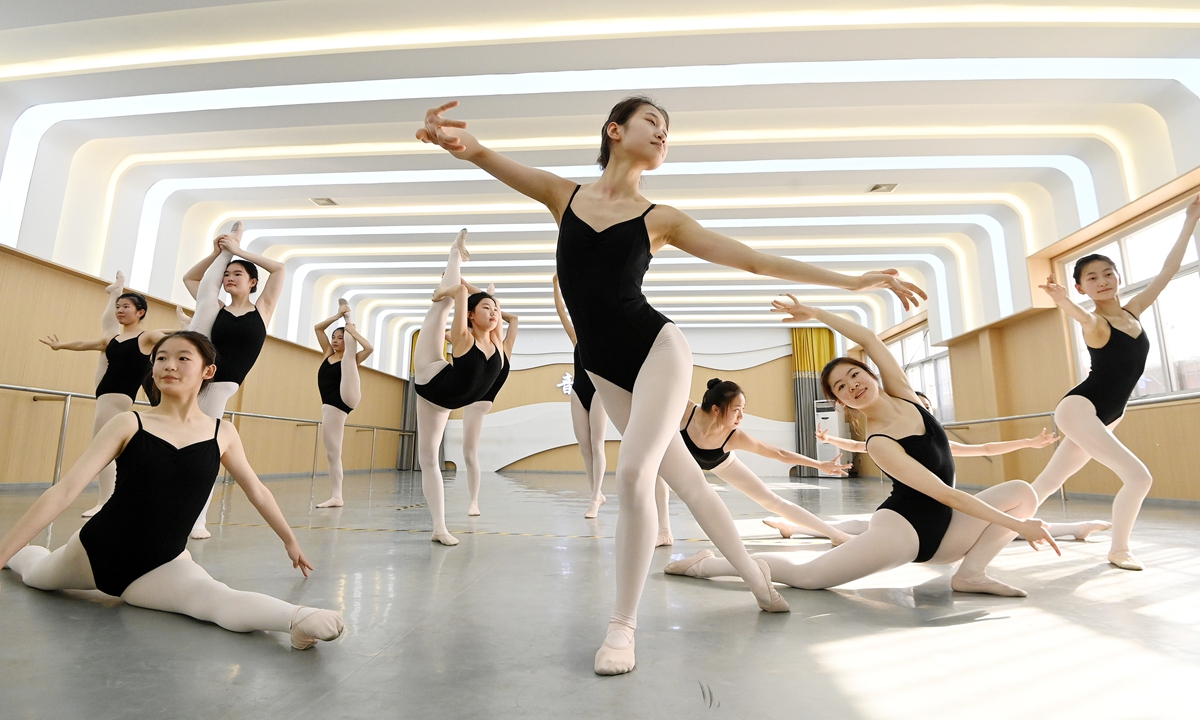
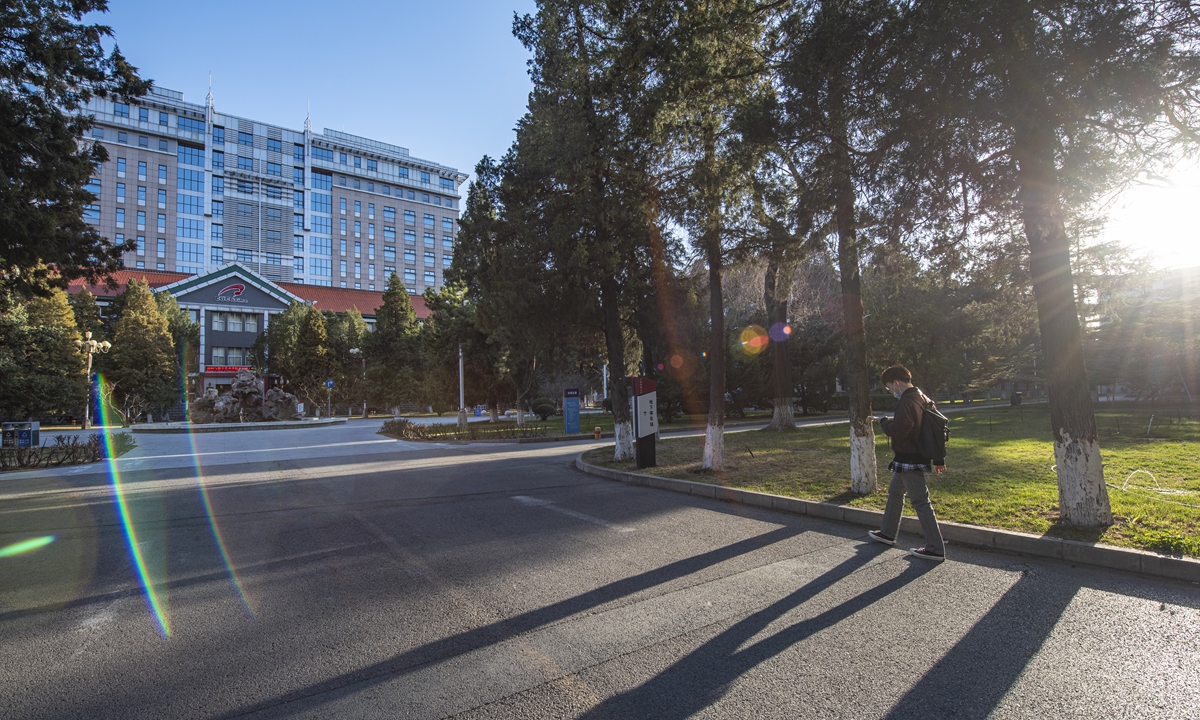
Even during summer break, changes to the admissions policy at the Communication University of China (CUC) have sparked heated discussions among students, with the reform becoming a hot topic on campus and on social media.
Amid heated debate over China's top media and arts school's admission reform, eight majors, including radio and television directing and theater directing, will no longer require separate arts exams and will instead admit students based solely on gaokao (the national college entrance exam) scores starting next year.
China's art college entrance examination, known as yikao, is a special admission pathway for students applying to arts-related majors. Applicants take both the gaokao and professional tests in areas such as fine arts, music, dance, acting, broadcasting and directing. Compared with many other university programs, art majors have traditionally placed less emphasis on gaokao scores and more on candidates' professional abilities and artistic potential.
"As one of China's most influential universities for media education, CUC's reform is seen as having broader implications," Xiong Bingqi, president of the 21st Century Education Research Institute and vice president of the China Association of College Newspapers, told the Global Times.
In his view, future arts admissions are likely to place greater emphasis on students' cultural literacy, professional interests and long-term potential.
Beyond the 'shortcut'
CUC's move reflects a broader trend among Chinese arts universities. In recent years, institutions such as Nanjing University of the Arts and Henan Academy of Fine Arts have reduced the number of majors requiring school-based exams on their specific art subjects, placing greater emphasis on academic performance and provincial-level arts examinations.
The changes reflect a broader trend in China's arts education admissions system, where universities have increasingly emphasized students' cultural foundation alongside their artistic abilities.
"CUC's latest adjustment reflects a broader trend in arts education reform, with some arts-related majors beginning to admit students based on their gaokao scores rather than separate professional examinations," Xiong told the Global Times.
According to Xiong, one of the key goals of the reform is to address the utilitarian mindset among some students and parents who view arts admissions as a "shortcut to college."
In the past, some arts programs had relatively lower requirements for cultural scores, prompting some students with weaker academic performance to turn to arts exams and enroll in professional training programs during high school. As a result, arts admissions were sometimes seen not as a choice driven by genuine artistic interest or career aspirations, but as an alternative pathway to enter universities.
"The cooling of arts exam fever, to me, is a good thing for arts education and talent cultivation," Xiong said. "By admitting eight majors directly based on cultural scores, CUC is effectively removing the stepping stone of the 'shortcut to college,' allowing more students with genuine artistic interests and professional ambitions to enter these fields."
For students, the reform has directly changed how they prepare for university and make academic choices.
"The changes have created more pathways for students interested in media-related fields," a junior arts management student surnamed Wang at CUC, told the Global Times.
Wang recalled that many students around her began preparing for arts exams as early as their sophomore year of high school and later traveled to cities where their target universities were located for intensive training.
As some media-related majors shift to cultural-score-based admissions, more students who did not take the arts exam but have a genuine interest in the media field may gain opportunities to enter these programs, she said.
Rethinking media talent
Beyond changing how students enter arts majors, the reform has also sparked discussion over how universities should train future media professionals.
A CUC sophomore student surnamed Wei from the School of Theater, Film and Television told the Global Times that one challenge after scrapping arts exams for some majors is how to support students who enter without systematic professional training.
"Students who previously prepared for arts exams often developed basic skills in audiovisual language and practical experience before entering university. Those admitted based on gaokao scores may need stronger professional guidance and more opportunities for practice," Wei said.
In addition to individual student development, the reform has also prompted discussions over what qualities future media professionals should possess. Kai Zhu, a drama education instructor at a leading high school in Beijing, told the Global Times that an overemphasis on exam-oriented training in media arts education had previously led some programs to focus on templates and techniques while neglecting core competencies.
"If media arts become a low-score pathway to university, the professional nature of the field will become blurred, and the industry may face a shortage of well-rounded talent," Kai said. CUC's reform signals a shift toward selecting media talent with both cultural depth and professional skills.
"Creative fields such as screenwriting and filmmaking are not built on technical skills alone; they require an understanding of society, humanity and history," he said.
"Cultural accumulation determines the depth and vision of creative works."
The reform is therefore not merely about changing the way students enter arts programs. Ultimately, it is about what kind of creators media and arts programs hope to nurture: not only those equipped with professional skills, but those who can think deeply, understand society and transform their cultural knowledge into meaningful works, he noted.
Wang Wenpei contributed to this story.
。
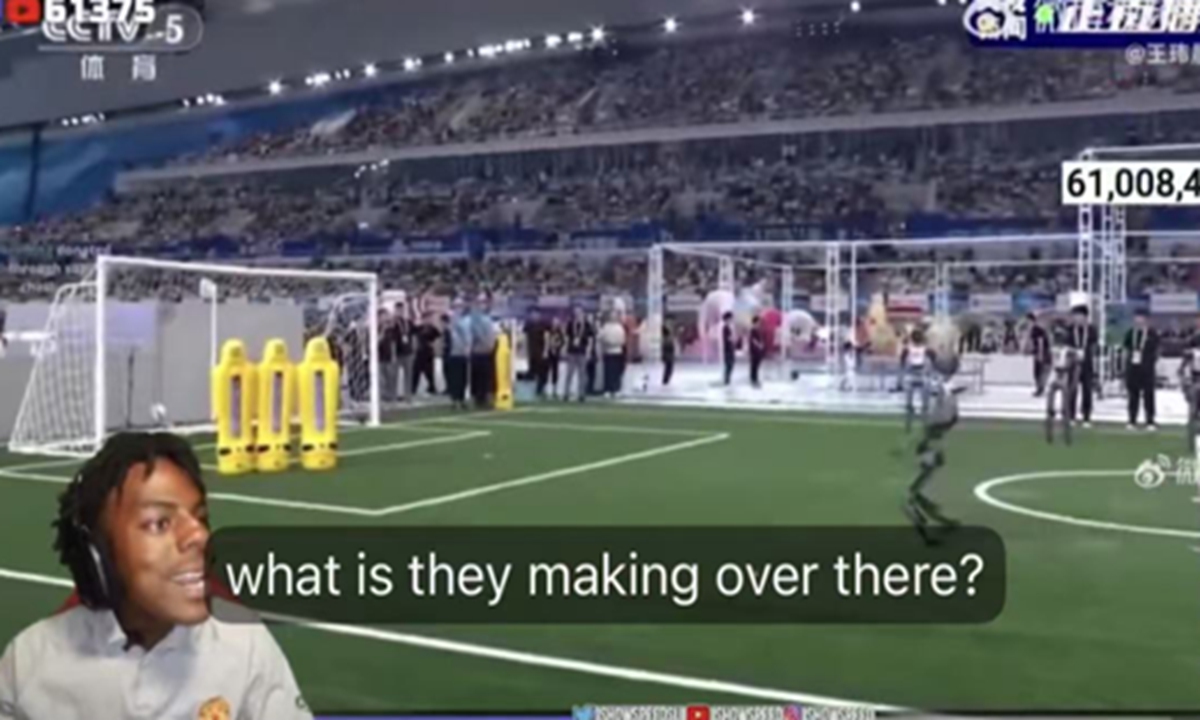
US YouTube sensation IShowSpeed was stunned by video of a Chinese humanoid robot scoring goals and performing the iconic "SIU" celebration of Portuguese football star Cristiano Ronaldo, saying he wanted to return to China.
According to the video clip posted by IShowSpeed's fan account Speedy Updates on X, after watching the robot's performance, the streamer said "We got to go back to China bro, I think it's time for China bro, the robot just did a SIU! What the hell, what is [are] they making over there?" He also said in Chinese, "Wo dong," meaning "I understand."
The video clip had received over 162,000 views and around 6,700 likes as of press time.
After seeing Speed's reaction to the robot football game, Chinese netizens commented that "the performance really hit him in the heart." Some joked that IShowSpeed might already imagine himself doing the "SIU" celebration alongside a group of robots.
The scene that caught IShowSpeed's attention came from the opening ceremony of the 2nd World Humanoid Robot Games (WHRG) held in Beijing from August 22 to August 26. The event features 3v3 humanoid robot football competitions, as well as 5v5 football matches involving both large and small humanoid robots, as displayed in the video.
Like last year's competition, this year's humanoid robot football matches adopt a fully autonomous mode without human remote control. This means the robots' performance during the opening ceremony was entirely driven by their built-in algorithms. Most of the robots used in the football competition are from Booster Robotics, a Chinese domestic company, the Global Times learned from the company.
IShowSpeed's reaction video has also revived netizens' memories of his previous China trip. On March 24, 2025, the influencer, who had more than 30 million followers at the time, launched his China tour and began livestreaming his journey. Speed and his team visited cities including Shanghai, Beijing and Chongqing, exploring landmarks such as the Bund, the Forbidden City and Chongqing's night views, while also experiencing Chinese culture including kungfu and Sichuan opera face-changing performances, CCTV News reported.
Global Times
。
Current article:http://ph5.guaxiazaopinduan.cfd/xja20/20260826/4020.html
Published on:00:00:00


